
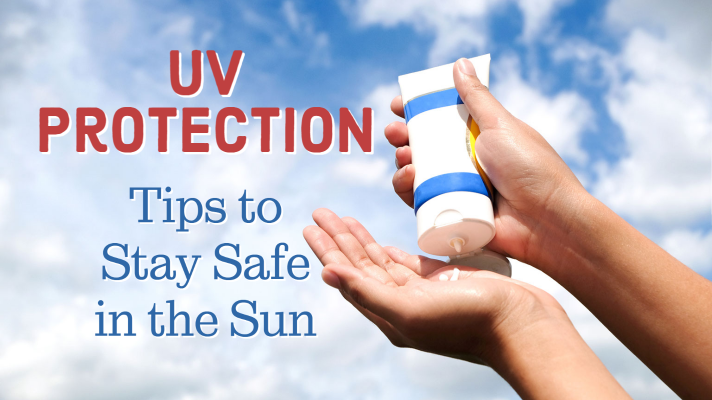
Tips to Stay Safe in the Sun
Summer has arrived and while the sun is shining bright it’s a golden time to highlight July as UV Safety Awareness Month!
We all love to take in those warm summer rays, but everyone must remember to protect their skin and eyes from the damaging effects of the sun.
The sun emits radiation known as UV-A and UV-B rays. Both types can damage your eyes and skin:
• UV-B rays have short wavelengths that reach the outer layer of your skin
• UV-A rays have longer wavelengths that can penetrate the middle layer of your skin
By learning the risks associated with too much sun exposure and taking the right precautions to protect you and your family from UV rays, everyone can enjoy the sun and outdoors safely.
Here are the harmful things unprotected sun exposure can do:
• Cause vision problems and damage to your eyes
• Suppression of the immune system
• Premature aging of the skin
• Skin cancer
Fortunately, there are things you can do to minimize the risk that comes with sun exposure.
1. Cover Up: Wearing a Hat (preferably wide brimmed) or other shade-protective clothing can partly shield your skin from the harmful effects of UV ray exposure. Proper clothing may include long-sleeved shirts, pants, hats, and Sunglasses – for eye protection.
2. Stay in the Shade: The sun’s glare is most intense at midday. Staying in the shade between the hours of 10 a.m. and 4 p.m. will further protect your skin. The sun can still damage your skin on cloudy days or in the winter. For this reason, it is important to stay protected throughout the year.
3. Choose the Right Sunscreen: This is extremely important. The U.S. Food and Drug Administration’s (FDA) new regulations for sunscreen labeling recommend that your sunscreen have a sun protection factor (SPF) of at least 15, and should protect against both Ultraviolet A (UV-A) and Ultraviolet B (UV-B) rays.
4. Use the Right Amount of Sunscreen: According to the National Council on Skin Cancer Prevention, most people apply only 25-50 percent of the recommended amount of sunscreen. When out in the sun, it’s important that you apply at least one ounce (a palmful) of sunscreen every two hours. You should apply it more often if you are sweating or swimming, even if the sunscreen is waterproof.
By taking the proper precautions and following this advice you and your loved ones can enjoy the sun. If you are having any problems after being in the sun, be sure to talk to your healthcare provider.
Enjoy the outdoors this summer and remember to protect your eyes and the skin you’re in.
Resources:
https://www.aao.org/eye-health/tips-prevention/sun
Cancer prevention: https://www.cancerhealth.com/basics/health-basics/cancer-prevention
How to choose clean and safe sunscreen: https://www.everydayhealth.com/skin-beauty/steps-choosing-clean-safe-sunscreen/